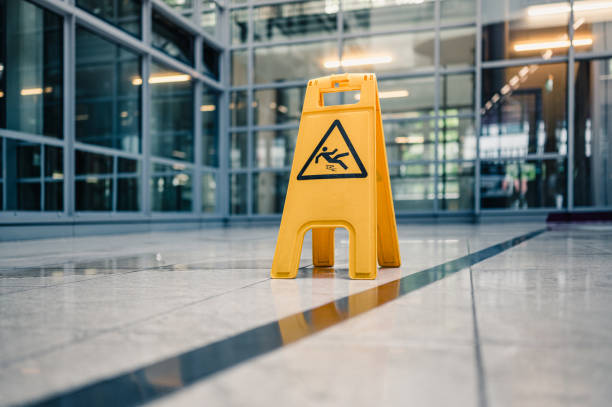
Imagine walking into a busy shopping mall or supermarket where the floor has just been cleaned. A small “Caution: Wet Floor” sign stands nearby, but moments later you slip, fall and injure yourself. When the matter is raised with management, the response may be that a warning sign was already displayed.
Many South Africans assume that once a disclaimer or warning sign is in place, businesses are automatically protected from liability.
However, legal experts say the situation is far more nuanced. Property owners and businesses still have a duty of care to ensure their premises are reasonably safe for members of the public.
According to personal injury lawyer Holly Wynne from DSC Attorneys, warning signs do not automatically absolve businesses of responsibility.
“They are not a catch-all. They don’t automatically remove liability from the business owner,” Wynne explained.
“Having said that, they do carry some weight. However, a business owner must still prove that the disclaimer was clearly visible, that it specifically addressed the risk the person experienced, and that it could be understood by the injured party. Otherwise, it may not stand up in court.”
Wynne said each case is assessed individually, based on the circumstances surrounding the incident. She noted that the key issue often lies in whether proper safety protocols were in place.
“The bottom line with these kinds of incidents is that each one is judged on its own facts. Businesses and public spaces that invite members of the public have a duty to ensure the environment is safe,” she added.
“They are not expected to guard against every possible risk, but proper cleaning protocols, maintenance plans and functioning safety measures can help avoid liability.”
Listen to the full interview with Holly Wynne below:
From a consumer rights perspective, the National Consumer Commission says businesses cannot simply rely on disclaimers to avoid accountability.
Commission spokesperson Phetolo Ntaba explained that under the Consumer Protection Act, consumers are still entitled to protection when paying for goods or services.
“You are a consumer. If you buy a ticket to an event or enter a venue for a service, businesses cannot simply say that whatever happens to you is not their responsibility,” Ntaba said.
“The law requires businesses to take accountability. They cannot completely absolve themselves of liability when consumers are paying for a service.”
Ntaba added that while indemnity forms are often used for higher-risk activities, such as adventure trips or sporting events, businesses are still required to ensure reasonable safety measures are in place.
Listen to the full interview with Phetolo Ntaba below:
VOC News
Photo: Pexels