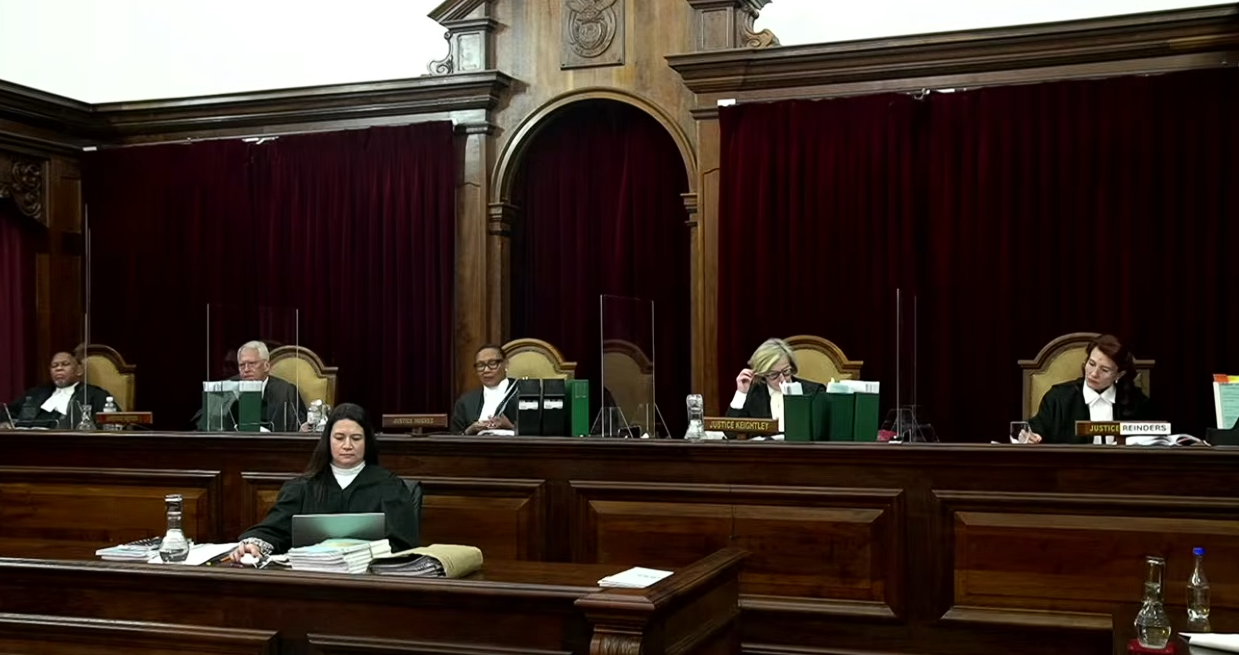
The Supreme Court of Appeal is considering government’s appeal against a High Court judgment that declared several regulations governing the R370 Social Relief of Distress grant unconstitutional and invalid.
The case focuses on issues including the online-only application system, the exclusion of potential beneficiaries and whether the grant should be expanded.
Speaking to VOC News, Siyanda Baduza, Junior Basic Income Researcher at the Institute for Economic Justice, says the outcome could have a significant impact on millions of people currently excluded from the grant.
Baduza says around eight million people are currently approved for the SRD grant each month, while government estimates that about 18.3 million people meet the income threshold.
“If we saw a ruling that cut down those unfair regulations, it could potentially double the number of people who currently receive that grant,” Baduza says.
He says the R370 payment is also inadequate, particularly for people living below the food poverty line.
“R370 is very, very little. It’s half the food poverty line,” he says.
Baduza argues that government should provide a clear plan to progressively increase the grant and expand access, rather than simply citing affordability concerns.
He says the Institute for Economic Justice also wants the SRD grant to become a permanent form of social assistance, with regular inflation-linked increases.
“We’ve had it for almost seven years now. So, make it permanent, include proper policy for it, and then treat it the same way you treat other grants,” Baduza says.
Photo: Screenshot