By Staff Reporter,
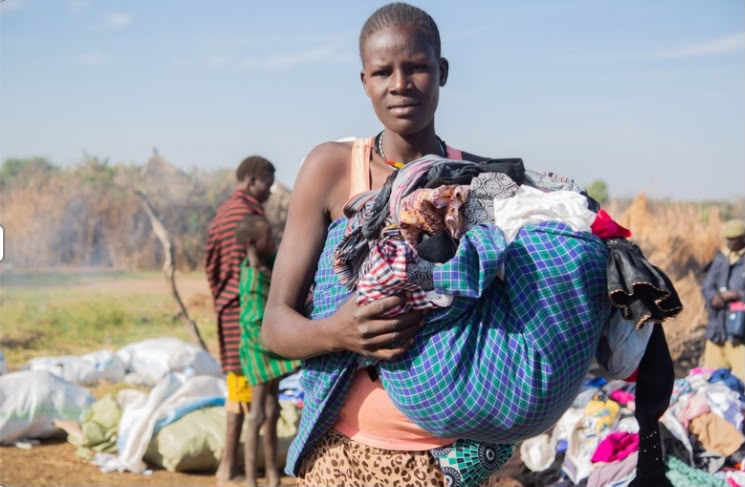
As more than 650,000 Sudanese refugees and asylum seekers in South Sudan face worsening food shortages and aid cuts, Sudanese analyst Ramadan Ahmed says the world is failing to name the actors behind the crisis and the scale of what civilians are enduring.
Speaking on VOC’s PM Drive, Ahmed described the situation as beyond description, with civilians forced to flee multiple times – from Khartoum to Al Jazeera in central Sudan to Gadaref, eastern Sudan, South Sudan, and into neighbouring countries including Ethiopia, Uganda, Kenya, Chad and Egypt.
“The suffering is distributed everywhere,” Ahmed said. “Those who are in the south we are talking about are the same ones that fled from Al Jazeera. A lot of atrocities were committed.”
He said conditions in army-controlled areas have become relatively stable, with some refugees who are in Egypt now returning, but those who remain in South Sudan are facing dehumanising conditions as humanitarian funding dries up.
Ahmed argued that the crisis should not be classified as a civil war but as a “war of aggression”, driven by international and regional actors.
According to Ahmed, the Rapid Support Forces (RSF) is a “functional paramilitary group” being armed and funded by the United Arab Emirates, which he described as acting at the behest of what he termed the “Zionist regime” and a small group of global tycoons seeking to control resources. The UAE has consistently denied arming the RSF despite widespread reports and circumstantial evidence cited by analysts and rights groups.
He claimed that arms are still flowing into Sudan, pointing to what he said were more than 300 armoured vehicles entering from Libya recently.
Asked why mainstream media and analysts hesitate to classify the situation as a genocide despite mass displacement, forced famine, and killings, Ahmed said double standards were at play.
“Until this moment RSF is not classified as a terrorist group despite all these atrocities,” he said. “Whenever their interests are clashed they definitely play down the narrative.”
He compared global attention on Gaza, which he said is more visible because of its small size and media presence, to Sudan, a sprawling country where atrocities happen across vast areas with less coverage.
“What happened in Sudan is more than what happened actually in Palestine because Sudan is… very spacious and atrocities are taking place everywhere,” he said.
Ahmed said Sudan’s wealth is central to the conflict. Sudan is Africa’s second-largest gold producer and is also rich in crude oil, agriculture and livestock.
“Most of the gold that is explored in Sudan has been smuggled into the United Arab Emirates. The Sudanese government is not making use of it at all,” he alleged.
He said the RSF’s initial project was a coup d’état, and when that failed, it shifted to a swift war intended to defeat the Sudanese army and take control of the country and its resources.
“The Sudanese people said no, this won’t happen,” he said, adding that the army, with civilian support, has recaptured many areas and that some RSF groups have surrendered.
Ahmed concluded that Sudan could have welcomed foreign investors like other nations, but what is happening is “broad day looting” under a system of hegemony rather than partnership.
The UN has warned that funding shortages are putting food and essential assistance for Sudanese refugees in South Sudan at major risk, as the war in Sudan continues to push more people across the border
Photo: Pexels