
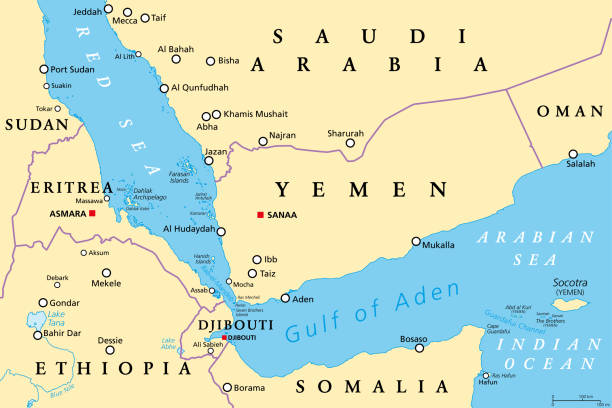
The escalating conflict between Saudi Arabia and Yemen is raising concerns far beyond the Middle East, with economists warning that disruptions to key shipping routes could push up oil prices, transport costs and inflation.
Director and Chief Economist at Econometrix, Dr Azar Jammine, stated that the conflict threatens two of the world’s most strategically important maritime corridors: the Strait of Hormuz and the Bab el-Mandeb Strait.
Jammine explained that the Strait of Hormuz is vital for oil exports from Gulf states, accounting for around 20% of global oil supplies. While Saudi Arabia previously reduced its reliance on Hormuz by building a pipeline to the Red Sea, renewed instability around the Bab el-Mandeb has created another major obstacle.
“Now that the Houthis have taken over Mokha and the Bab el-Mandeb Strait, that is also no longer that easy for the Saudis,” he said.
The Bab el-Mandeb serves as a gateway between the Red Sea and the Gulf of Aden, linking global trade through the Suez Canal. Although it carries a smaller share of oil than Hormuz, Jammine says it remains highly significant.
“With the Strait of Hormuz, we’re talking about 20% of global oil supplies. Bab el-Mandeb is somewhere in the order of 5% to 7%, but that’s still significant,” he said.
Jammine said the immediate consequence has been rising international oil prices, with potential knock-on effects for fuel costs, shipping and inflation. For South Africa, higher energy prices could place additional pressure on households, businesses and the rand as global markets respond to growing geopolitical uncertainty.
Listen to the full interview below:
VOC News
Photo: Pexels