The Cape Crime Crisis Coalition has denounced the President’s recent announcement that the South African National Defence Force (SANDF) will be deployed to the Cape Flats. The group argues that previous army deployments failed to deliver long-term results and that declaring a state of emergency would instead direct government resources and funding toward addressing the entrenched problem of gang violence in local communities.
Speaking to VOC News, Llewelyn MacMaster, chairperson of the Cape Crime Crisis Coalition, said deploying the SANDF does not address the root problems within policing services. He noted that the Acting Minister of Police has repeatedly stated that the police were unprepared.
“We want decisive action from the police service, but clearly they do not have a plan, as the minister said in Mitchells Plain last year, or they are not equipped to deal with criminality, as he said this year. So we are proposing something different that will bring more lasting solutions to communities, because this is not just a security or policing matter – it requires intervention from more than one state department,” said MacMaster.
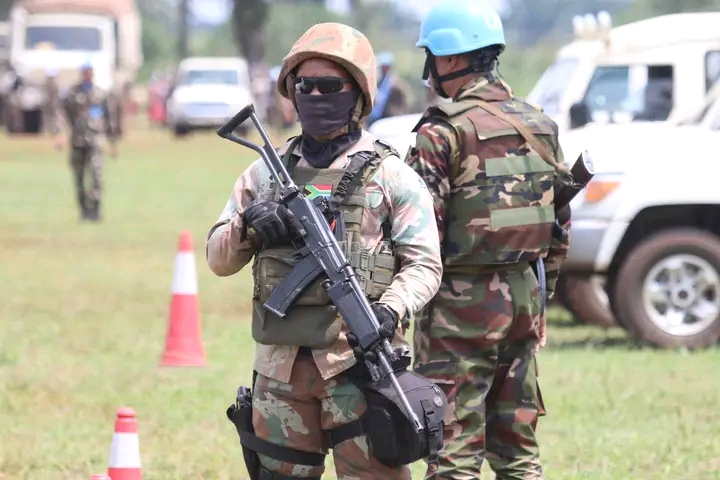
In 2019, the government deployed SANDF personnel, with the army working alongside the South African Police Service (SAPS) to conduct cordon-and-search operations, maintain strong points in hotspots, and carry out foot and vehicle patrols.
The deployment began in July 2019 and was initially scheduled to conclude in September that year. However, at the end of the designated period, the President wrote to Parliament requesting an extension of the SANDF’s deployment.
In the Department of Defence Annual Report for 2019/2020, the department described the deployment of SANDF personnel as “fruitful”, citing the positive reception from community members.
However, MacMaster maintains that the operation was ultimately unsuccessful. While it led to a reduction in reported murders during the months of deployment, he said there was no evidence of a sustained decrease in murder rates in affected communities.
“We saw the army deployment in 2019 under Operation Prosper, which was launched with great fanfare in Mitchells Plain, Nyanga, and across the Cape Flats. But the 2020 evaluation of Operation Prosper, which examined the role and impact of the SANDF, including its effect on the murder rate, found that while there appeared to be a reduction in murders in the month the deployment began, there was no evidence that the army’s presence significantly reduced murders in the affected communities compared to periods when the army was absent,” MacMaster explained.
Photo: Wikimedia Commons