
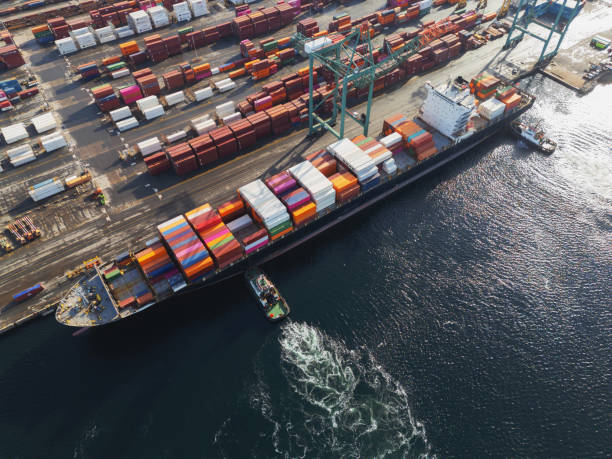
The United States Senate has approved a one-year extension of the African Growth and Opportunity Act (AGOA), allowing eligible African countries continued duty-free access to US markets. While the move offers short-term relief for exporters, economists warn that uncertainty around tariffs and long-term trade relations remains a concern for South Africa.
AGOA, first enacted in 2000, aims to boost trade and economic growth in sub-Saharan Africa by removing tariffs on selected exports to the United States. However, the latest extension, limited to just one year, has raised questions about investment certainty and whether South Africa will fully benefit.
Econometrix Director and Chief Economist Dr Azar Jammine said there is still confusion over how AGOA will interact with existing US trade measures. “We are still not very clear on whether this will supersede the ordinary tariffs imposed by the Trump administration on various countries, in South Africa’s case, the 30%,” he said. “Will that remain in place, or does AGOA replace it? There’s a lack of certainty.”
Jammine also raised doubts about South Africa’s continued eligibility under the agreement. “We’re not sure whether this will necessarily apply to South Africa, or whether President Trump, who must approve this, will decide to exclude South Africa from the agreement and limit it to other African countries,” he added.
Despite these uncertainties, Jammine noted that AGOA applies to only a small share of South Africa’s exports. “About 7% to 8% of South Africa’s total exports go to the United States, and roughly 4% of those are exempt from tariffs,” he explained. These include platinum group metals, chromium, titanium, and more recently, citrus products.
While the extension provides some breathing room, analysts argue that a longer-term agreement is needed to give exporters and investors greater confidence.
Listen to the full interview below:
VOC News
Photo: Pixabay