
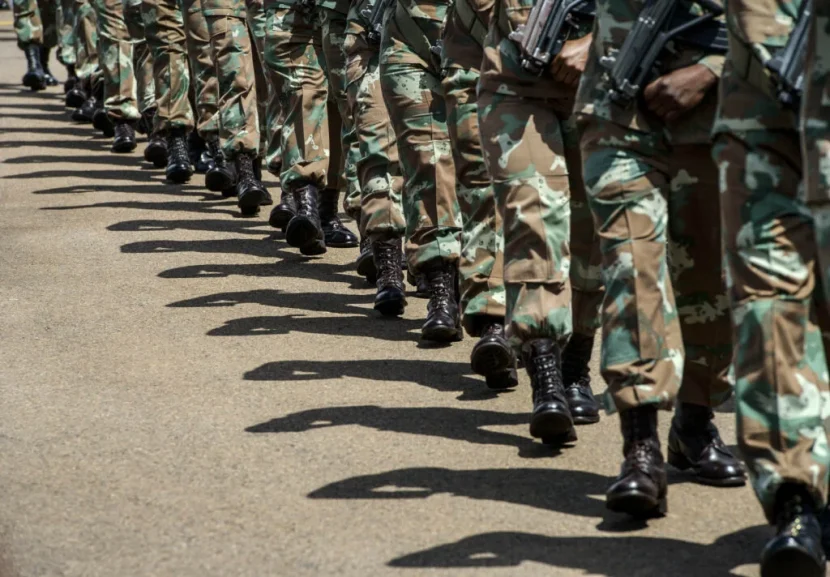
Senior officials from the South African National Defence Force (SANDF) and the South African Police Service (SAPS) have outlined a coordinated national strategy to combat organised crime, including illicit mining, gang violence, and extortion, during a joint briefing to Parliament on Friday.
Brigadier General Martin Kgopane told the Joint Standing Committee on Defence and the Portfolio Committee on Police that South Africa continues to face “complex organised crime threats” linked to illegal firearms, corruption, and infrastructure damage.
He said a multidisciplinary approach involving law enforcement, intelligence, and military support is necessary to stabilise affected areas.
“The scale and persistence of these threats endanger national security and require a coordinated state response,” Kgopane said.
“We are ready. We have formed the necessary structures to engage this criminality on all fronts.”
Kgopane confirmed that the SANDF has been deployed in cooperation with SAPS across several provinces, including the Western Cape, Gauteng, and the Eastern Cape, with operations expected to intensify from April following mission-readiness training.
He added that strict legal and constitutional frameworks would guide the deployment.
Major General Tom Yalo emphasised that the role of the military is to support policing efforts rather than replace them.
“Arrests are the purview of the police. As soldiers, we create conditions that enable the police to do their work,” he said.
Yalo also highlighted improved coordination between the two forces, noting that police officers would be embedded alongside soldiers during operations.
“We plan together, we coordinate together, and we co-execute. This time around, police are deployed jointly and will operate alongside the defence force.”
Members of Parliament, including Mkhonto weSizwe MP David Skosana, used the session to raise questions on issues such as prosecution readiness, exit strategies, and the long-term sustainability of deployments as part of ongoing oversight.
Officials maintained that the operation aims to reduce violent crime, dismantle criminal networks, and restore stability in affected communities while ensuring respect for human rights.
Photo: Sourced