By Sheefah Irambona
For millions of South Africans living with disabilities, the biggest obstacle isn’t their disability but the world around them. From inaccessible public spaces to limited transport options and exclusion from decision-making, the barriers they face are often created by society, not by their physical conditions.
According to the National Council of and for Persons with Disabilities (NCPD), approximately 3.3 million South Africans, around 7.5% of the population, live with disabilities. Yet despite ongoing efforts to improve accessibility, many still struggle to access safe, affordable transport and public spaces designed with their needs in mind.
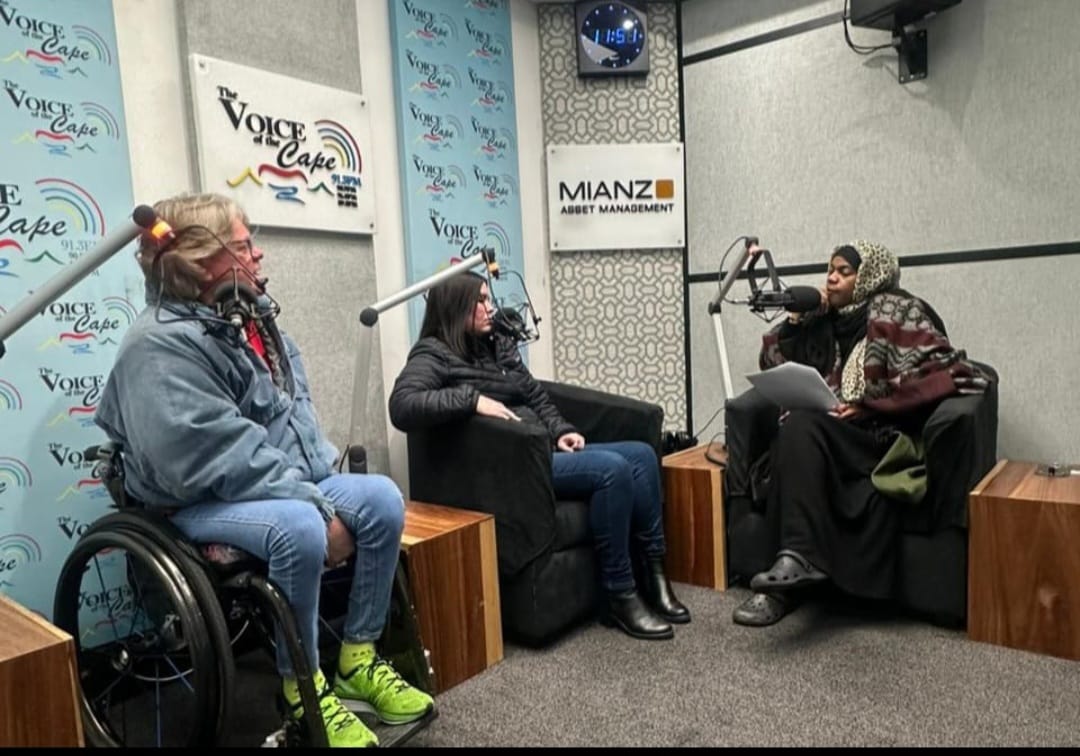
For disability advocate Tony Williams, this reality has been personal for more than 40 years.
Tony’s life changed forever during a motorcycle accident in the Hout Bay dunes. After launching off a sand dune, he landed with such force that he broke his back, and instead of allowing that moment to define him, Tony chose to redefine what life with a disability could look like.
Today, he has spent decades advocating for greater accessibility and inclusion. His message is simple: “One step is a step too far.”
His commitment to helping others extends beyond campaigning. Together with friends, Tony repairs donated wheelchairs and gives them to people who cannot afford one, stepping in where many feel support has fallen short.
His advice to others living with disabilities is both practical and powerful: “Get yourself seen. Make your voice heard. That’s the only way things will change.”
That same determination is reflected in the story of Sumarie Jordaan, who was born with a hearing impairment and cerebral palsy. Rather than seeing her disability as a limitation, Sumarie made a choice.
“You have two choices,” she says. “You can feel sorry for yourself for the rest of your life, or you can decide to change the world.”
Sumarie went on to become one of South Africa’s first television presenters with a disability while also pursuing a career as a songwriter and producer. She credits much of her success to a strong support system that encouraged her to dream beyond society’s expectations.
Their stories remind us that disability does not define potential. What often determines opportunity is whether society chooses inclusion over exclusion.
True inclusion means more than ramps and accessible parking bays. It means designing cities, transport systems, workplaces and public spaces that recognise accessibility as a right, not a privilege.
At the same time, these stories challenge all of us to rethink how we respond to adversity. While every journey is different, Tony and Sumarie demonstrate that purpose can exist alongside hardship, and that resilience has the power to inspire change far beyond ourselves.
Listen to the full conversation
For more in-depth, thought-provoking conversations that inform, inspire and empower, tune in to Mornings with Purpose, Monday to Thursday, from 10am to 12pm.