
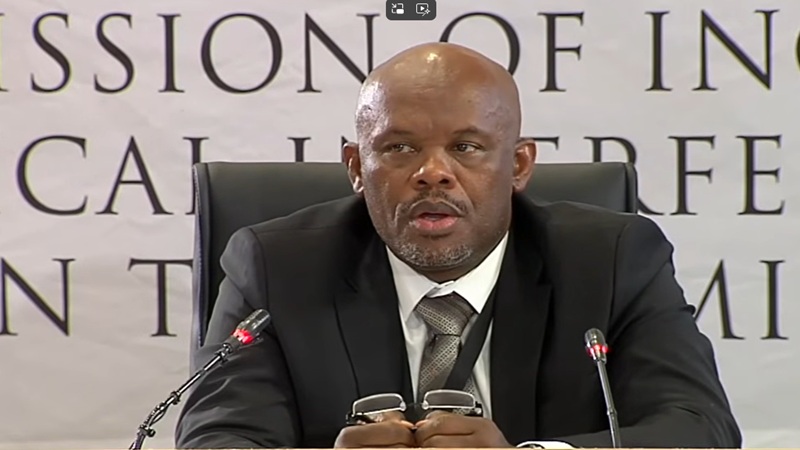
The Judicial Commission of Inquiry into criminality, political interference, and corruption within South Africa’s criminal justice system, widely known as the Madlanga Commission, has resumed hearings at the Brigitte Mabandla Justice College in Pretoria. The inquiry continues to examine allegations of misconduct and undue influence within law enforcement structures.
Among those who have appeared before the commission is suspended Deputy National Commissioner for Crime Detection, Shadrack Sibiya. His testimony has attracted significant scrutiny from analysts and observers following the proceedings.
Retired Interpol Ambassador and security strategist Andy Mashaile described Sibiya’s presentation as lacking coherence and strategic focus.
“We had a comedy of errors in his presentation when you do a proper strategic analysis, meaning a number of issues came to the fore. It really showed that he was trying to deflect attention from himself and introduce other people, their names, and telephone recordings that he had made,” Mashaile said.
Mashaile added that, in his view, Sibiya’s legal arguments focused more on challenging procedural aspects of the investigation than on addressing the substantive allegations. He said Sibiya attempted to portray the search and seizure warrants executed against him as flawed, suggesting the process was biased in an effort to undermine the legitimacy of the evidence presented.
According to Mashaile, this strategy carried risks, particularly where aspects of the testimony were disputed. He noted that the approach became problematic when Sibiya acknowledged certain claims raised by KwaZulu-Natal Provincial Commissioner General Nhlanhla Mkhwanazi. This included admitting to a personal relationship with Witness F, while maintaining that it was not improper.
According to Mashaile, Sibiya stated: “Yes, I have a close relationship with Witness F, and I am not trying to distance myself from him or from our relationship, but I did nothing wrong.”
The commission is expected to continue hearing evidence as it works to determine the extent of alleged wrongdoing within the criminal justice system.
Listen to the full interview below:
VOC News
Photo: Screenshot