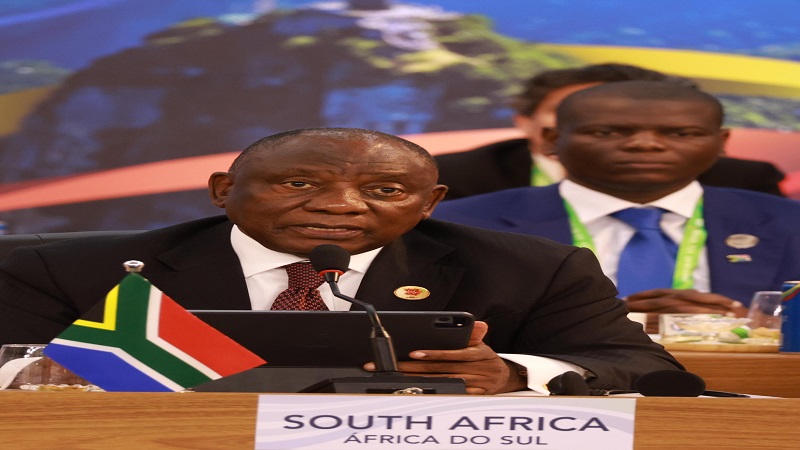
President Cyril Ramaphosa has approved a 3.8% salary increase for the deputy president, ministers, deputy ministers, and parliamentarians—a move that has reignited public debate around political accountability and economic priorities. The increase, published in the Government Gazette, comes at a time when many South Africans are struggling with rising living costs and the lingering effects of a sluggish economy.
The salary adjustment is slightly lower than the 4.1% recommended by the Independent Commission for the Remuneration of Public Office-Bearers. It also coincides with growing political pressure from opposition party ActionSA, which has proposed legislation aimed at cutting executive perks and abolishing deputy minister positions. The bill is expected to be debated in Parliament in 2026.
The approved pay rise, backdated to April 2025, affects several senior public officials. Deputy President Paul Mashatile’s annual salary will increase to R3.2 million, ministers will earn R2.7 million, and deputy ministers will receive R2.2 million. Members of Parliament and provincial legislatures will also receive increases ranging from R48,000 to R67,000, depending on their positions.
Political economist Professor William Gumede, Associate Professor of Public and Development Management at the University of the Witwatersrand, strongly criticised the decision, describing it as “shocking” and “uncaring” given the country’s current economic challenges.
“This is shocking. It is uncaring and, frankly, irresponsible on the part of the president and politicians,” Professor Gumede said. “To grant themselves this kind of increase, given the climate we are facing as a country—potentially one of our biggest economic crises—is deeply troubling.”
He added that politicians should have reduced their salaries to demonstrate solidarity with ordinary South Africans.
“They should have taken a haircut—reducing their salaries, not increasing them—to send a signal of compassion and empathy, and to show that they genuinely care about the people they claim to represent,” Gumede said.
Professor Gumede also highlighted the disparity between political salaries and the country’s economic performance, noting that South Africa’s global economic standing has declined since 1994. “We are increasing the salaries of politicians who have failed year after year,” he said. “At the very least, politicians should reduce their salaries by a third.”
The debate over the pay increase is expected to continue as South Africa grapples with economic instability and growing calls for greater political accountability.
Listen to the full audio below:
VOC News
Photo: X/ @PresidencyZA