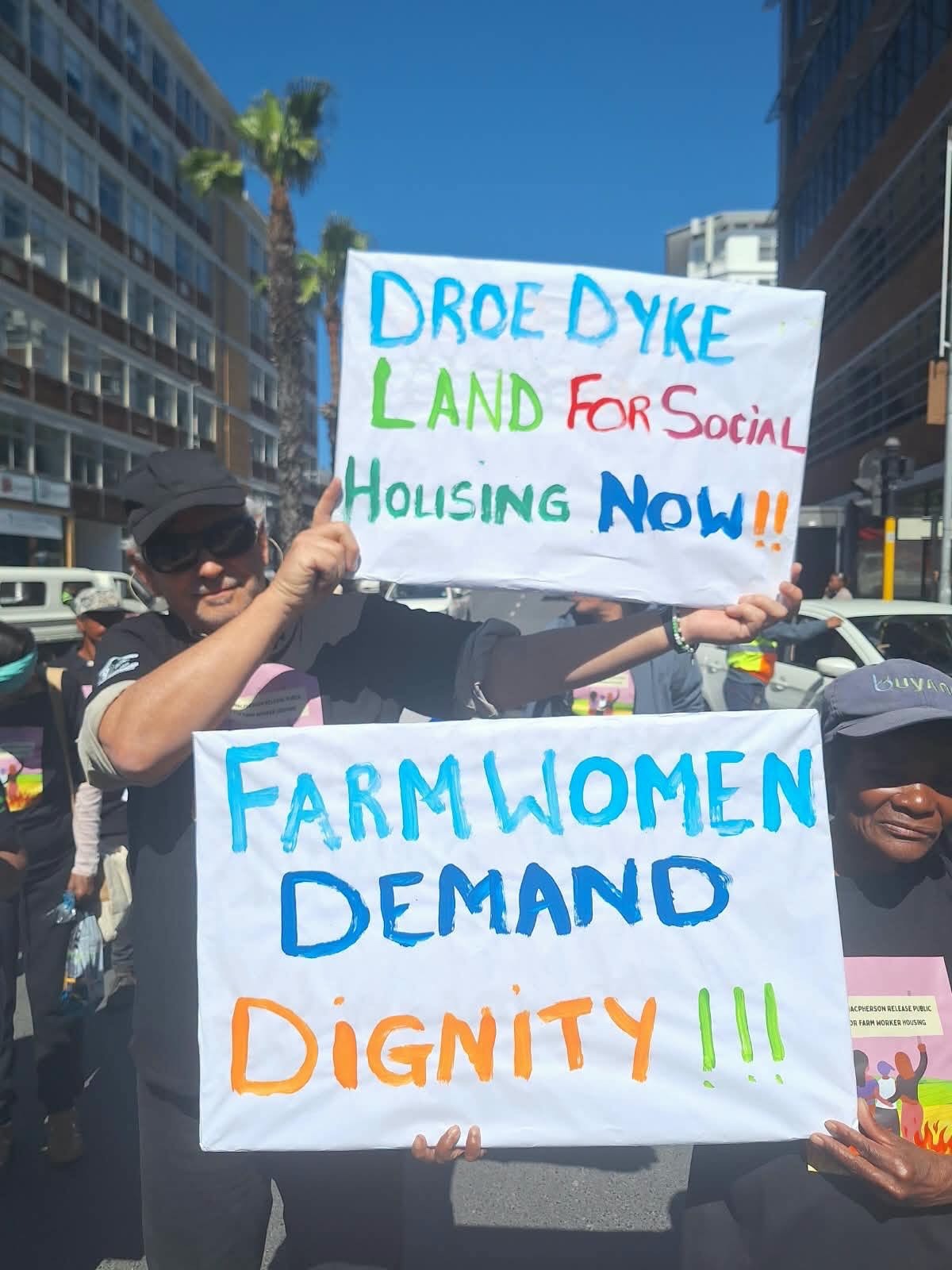

More than a year after the Constitutional Court heard arguments on the future of the Tafelberg site in Sea Point, judgement is still pending. The case centres on whether well-located public land must be used to address apartheid-era spatial inequality, including through social housing. Housing activists warn that delays are affecting workers who can no longer afford to live near their jobs.
Speaking to VOC News, Ndifuna Ukwazi’s head of organising and campaigns, Buhle Booi, explained the history of the fight: “As far back as 2016, the provincial government wanted to sell the Tafelberg site to a private entity.” Domestic workers and security guards asked us to advocate for housing there. This fight has been ongoing since 1998. Over 5,000 people petitioned for the site to be used for social housing, and the High Court agreed that the sale should be set aside.”
Booi said the current appeal at the Constitutional Court focuses on three issues: the state’s obligation to redress spatial apartheid, rules for public participation in the disposal of public land, and legal interpretations regarding the government’s immovable assets.
“Shortly after the court hearing last year, the provincial government announced it intends to use the site for social and affordable housing, which we welcome,” Booi added. Pre-feasibility studies indicate that 270 units of affordable and social housing could be developed on the site, alongside a portion of market-related housing to ensure viability.
Booi praised the public participation process so far: “The residents of Sea Point largely support the development. There has not been a single submission opposing it. This project will provide homes for working-class residents and young professionals who need a place to call home.”
The Constitutional Court’s long-awaited judgement will determine whether Tafelberg can become a key tool in addressing Cape Town’s housing crisis.
Listen to the full interview below:
VOC News
Photo: Pexels