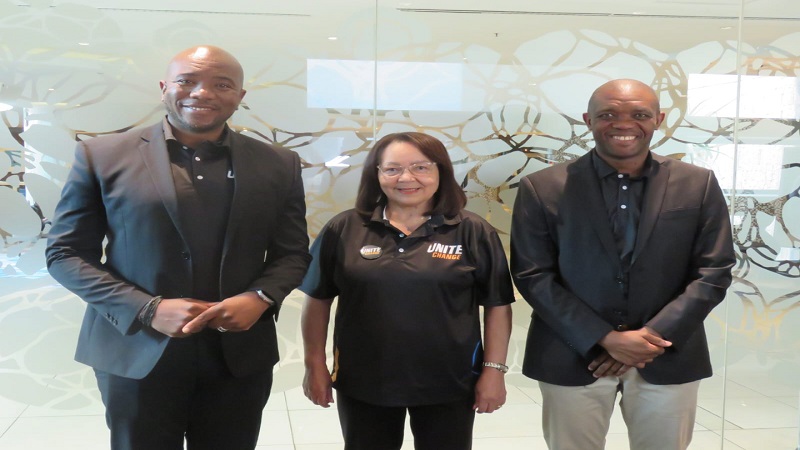
Three opposition parties, Build One South Africa, Rise Mzansi, and the GOOD Party, have officially merged to form a new political movement, Unite for Change.
The announcement was made in Johannesburg on Sunday, with the new party confirming its intention to contest the 2026 local government elections. While current councillors, MPs, and MPLs will remain under their existing party banners until the end of their terms, the movement aims to present a united alternative as the ANC’s support continues to decline.
Political analyst Sandile Swana described the merger as a positive step toward consolidating the achievements of smaller opposition parties.
“This merger of the three political parties into one party called Unite for Change is a good move to consolidate the achievements of the conservative black parties. You’ll remember that some of these people came out of the DA, so there’s an element of conservative politics that they did not like in the DA, and I think they’ve achieved some success,” said Swana.
“We’ve seen Mmusi Maimane chairing some committees in Parliament. We’ve seen Songezo Zibi do the same. We’ve seen Patricia de Lille taking a cabinet post. So, they have a measure of success, and it’s about consolidating that success into an entity that can actually make an impact, particularly in the municipal sector,” he added.
Listen to the full interview below:
Political analyst Professor Andre Duvenhage said the merger is also a strategic response to South Africa’s increasingly competitive political landscape.
“To compete with over 470 parties, especially in the central regions where the Democratic Alliance is currently very strong, is challenging. Small parties cannot be competitive under these conditions,” he explained.
“This opens space for collaboration with relatively little competition among themselves, one party may focus on Johannesburg, another on Tshwane, another on Ekurhuleni. In this case, it is certainly in the interest of the three parties to follow such a strategy.”
The formation of Unite for Change underscores the ongoing fragmentation of South Africa’s political scene, as new alliances and breakaway groups seek to fill the space left by the ANC’s weakening dominance. The new party now plans to register with the Electoral Commission of South Africa (IEC) and begin building its campaign ahead of next year’s municipal elections.
Listen to the full interview below:
VOC News
Photo: X/ @Unite4ChangeZA