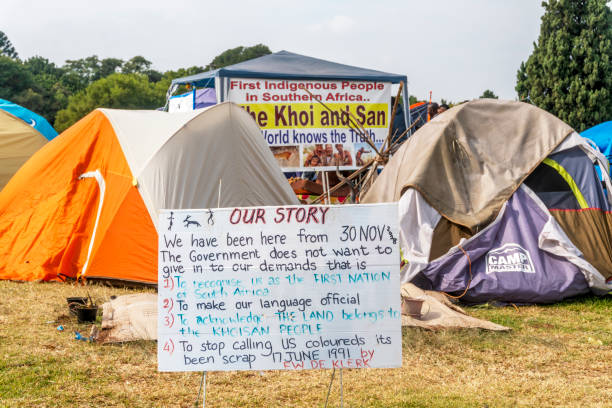
As Heritage Month draws to a close, South Africans reflect on the rich blend of cultures, cuisines, traditions, and languages that make up the country’s identity. From food and fashion to music and dance, the month celebrates the many influences that shape our nation. Yet, while most South Africans take pride in this diversity, not all heritages are equally secure. Many Indigenous languages, particularly those of the Khoi and San, are on the brink of extinction.
Linguist Dr. Menán du Plessis has dedicated years to documenting these endangered languages. For her, heritage is more than festive celebrations; it is deeply tied to the voices of the past.
“For many of us, English is seen as a kind of passport language, and so we tend to use it at our workplace, at our children’s schools, or at social gatherings, even though it may not be our first language,” she explains. “But even so, most of us are at least bilingual, and often multilingual, so that the indigenous languages of our country continue to be spoken, used in vibrant debate, and have poetry and songs written in them.”
Still, Dr. du Plessis warns that some communities are losing their ancestral tongues entirely. “It’s painfully difficult for people to find or know how to read and understand a poem or a prayer in any one of these languages, or even something as simple as a list of bird or plant names. Of course, I’m talking about the languages of the Khoi and the San.”
The term “Khoisan” is often used to describe these languages collectively, but Dr. du Plessis points out that they are, in fact, three distinct language families, not necessarily related. In South Africa, the main representatives include languages once spoken by the Khoi, such as Nama, Kora, Hona, and Cape Khoi, as well as those of the San, like Tʃh’am and N|uu.
Today, there are only a handful of speakers left. “Most of you will have heard of Oma Katrina Esau,” says Dr. du Plessis, “who is the last living speaker of N|uu. There are also perhaps a few elders in parts of the country who may still speak some Nama, Kora, or what is sometimes referred to as Khoikwa.”
Even so, echoes of these languages remain. In regions like Namaqualand, Afrikaans incorporates many Nama words and phrases, keeping fragments of this heritage alive.
As Heritage Month closes, the message is clear: preserving language is preserving history. For the Khoi and San, revitalisation is not just about words; it is about reclaiming identity, honouring ancestors, and ensuring that future generations can still hear the voices of the first people of Southern Africa.
Listen to the full interview below:
Photo: Pixabay