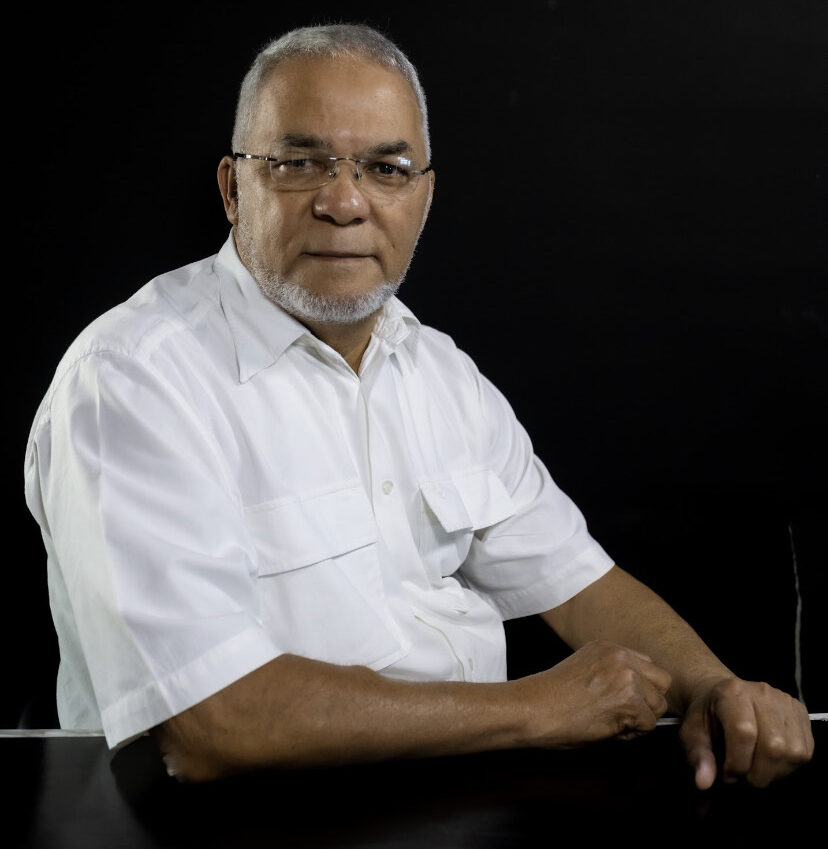

By Media Analyst Sedick Crombie
Besides the legal and geopolitical contexts and analyses that many analysts make in relation to the Venezuelan situation—and which are mostly spot on—there are also many other contexts that play a significant role.
Legal: that this invasion and the capturing of a foreign president are against international law; that it constitutes kidnapping; and that no foreign country reserves the right to do what the US did, etc.
Geopolitical: that it was done to control the US’s backyard and instill fear in other countries about US power, etc. I also believe that the geopolitical alliances between countries that fear this action and believe it could be broadened to them as well, will be strengthened as a result.
Despite these legal and geopolitical factors, I further believe that there are other mitigating reasons as to why Trump embarked upon this action. These are perspectives and personal insights which I perceive also play a role in this entire saga.
Economic
The US has enough oil to sustain itself and might not need other countries’ oil. This US oil might not be of the calibre of Venezuelan oil, but the invasion of Venezuela has a dual economic rationale as to why this oil-rich country has been targeted.
a) China has become Venezuela’s biggest client for its oil, paying for it in yuan and thus sidelining the USD. Coupled with this move, the 52-year-old agreement between Saudi Arabia and the US, which required the use of the petrodollar for all oil purchases from that country, was not renewed. This effectively marginalizes the US economy and the SWIFT payment system. If the US allows this to continue, it could effectively undermine the USD as the global reserve currency and its control over the oxygen that runs global economies: oil.
b) Trump is being utilized by powerful economic, financial, and banking elites in the US and across the world to ensure that this loss of economic coercion does not materialize. He is a megalomaniac, bloodthirsty billionaire who would not wish to see his fortunes diminish, so it is therefore not too difficult to convince him to act as an attack dog. Targeting Venezuela effectively throws down the gauntlet to China and any other aspirant challengers to the USD and US economic interests. American policy is based on the premise that it has the right to conduct pre-emptive strikes on any country or movement (BRICS+) that it perceives could harm its economic interests.
De-dollarization
This brings us to de-dollarization, a process which Saddam Hussein and Muammar Gaddafi attempted previously. The unfortunate decision both made was trying to do it on their own. The establishment of BRICS and the momentum gained towards BRICS+ have spun a different weave this time. Some of the world’s biggest economies are now banding together to do exactly what Saddam and Gaddafi tried to achieve.
This has put the US on tenterhooks, and one of the first actions Trump took upon coming to power this time was to invoke tariffs on all goods entering the US, thereby demonstrating America’s unfettered power. When this failed to completely halt the surge towards de-dollarization, Trump became increasingly manic, and the invasion of Venezuela is proof of this.
Many across the globe are dumbstruck by this brazen flouting of international law, and as the dust settles, new approaches will be adopted by world leaders to counter these US imperialistic actions. Unfortunately for the US, this attack will not deter countries from seeking alternatives to the weaponization of the dollar and will, in fact, fast-track eventual de-dollarization. The Venezuelan attack further exposes panic within the US and only provides greater impetus for global de-dollarization.
I have always found it extremely baffling that if two countries—for example, China and South Africa—strike a business deal, they are required to use the SWIFT system and the USD. In such cases, America, irrespective of whether it is the buyer or the seller, benefits from the transaction because both parties must use the USD via SWIFT. The use of the USD, printed uncontrollably by the US, along with commissions and bank charges, all accrue to America. When one considers the millions of global deals conducted daily that the US benefits from despite not being a party to them, the situation becomes absurd.
Diversion
The Epstein case and the incriminating evidence against Trump, along with hundreds—if not thousands—of high-profile individuals, are an integral part of the shenanigans playing out. The US is well known for utilizing shock tactics to divert attention from debilitating domestic issues. Attacking Venezuela, after months of intensified mainstream US media denigration of President Maduro, is a clear example of this doctrine.
Netanyahu Visit
Whenever Netanyahu visits the US, some form of invasion appears to be imminent. To many, the hidden hand of Netanyahu plays a determining role in shaping US foreign policy in line with the Israeli agenda. His most recent visit preceded this invasion.
Trump’s State of Mind
There have been many questions surrounding Trump’s continued state of mind. His erratic behaviour and pronouncements are increasingly symptomatic and serve as further proof of this concern.
This article represents the personal views and opinions of the author. It does not purport to present established fact, nor does it necessarily reflect the views of publisher. Readers are encouraged to engage critically with the content and seek a range of perspectives on the issues discussed.
VOC