By Sheefah Irambona
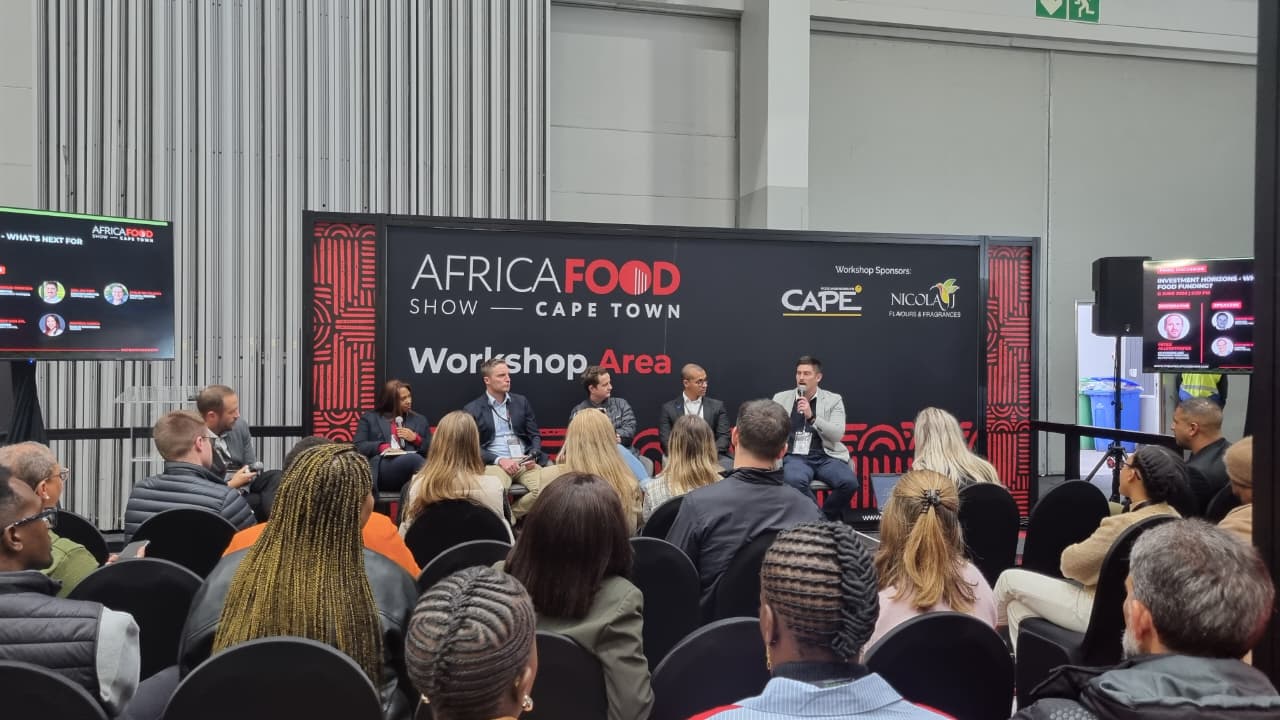
The Africa Food Expo (10–12 June) brought together policymakers, researchers, innovators, and industry leaders to confront a pressing challenge: building a sustainable and equitable food system amid rapid technological change and persistent food insecurity. A key insight from the discussions was that Africa’s food future will not be defined by production alone, but by efficiency, access, and control over emerging technologies.
In a post-expo discussion, researcher, author, and TEDx speaker Dr James Maisiri examined how artificial intelligence is reshaping agriculture and what is at stake if Africa does not actively lead its own transformation. He highlighted that AI can enable farmers to “produce much more, with much less,” linking technological innovation directly to the challenge of food security.
For small-scale farmers, AI-driven platforms are already expanding access to shared machinery, such as tractor rentals, while also providing data tools for planning, maintenance, and productivity tracking. This is particularly important in a region where agriculture remains a major employer and a key economic pillar.
Dr Maisiri pointed to several factors driving the urgency of AI adoption, including global population growth towards 10 billion by 2050, agriculture’s central role in African economies, and the reality that roughly one-third of food is lost or wasted. Climate change further intensifies these pressures by reducing predictability and yields across food systems. In this context, he described AI as a “potential saving grace” for improving prediction, reducing waste, and enabling real-time decision-making, while cautioning that limited capacity and weak implementation remain major barriers.
He also stressed that hunger is not only a production issue but also a systems and access problem. In South Africa alone, around 15–16 million people face food insecurity, driven by unemployment, rising food prices, and slow economic growth, with inflation in essential goods such as meat and vegetables adding further pressure. This shows that food insecurity is shaped as much by affordability and distribution as it is by supply.
At the same time, Dr Maisiri warned that many AI systems are developed outside Africa and often fail to reflect local agricultural realities. This concern is compounded by global power imbalances in technology, with approximately 90% of computing power concentrated in the United States and China, while Africa accounts for roughly 1%. As a result, African data is often used to build foreign AI systems that are later sold back to the continent, with limited local benefit.
Despite these challenges, Dr Maisiri emphasised that progress is possible through collective action. No single African country can build competitive AI systems alone, making a unified continental approach essential. While AI can help reduce waste and improve productivity, it cannot resolve deeper structural issues such as inequality, unemployment, and limited access to resources on its own. The path forward therefore requires collaboration, accountability, and policy choices that prioritise fairness.
Ultimately, AI is already shaping Africa’s food systems. The question is no longer whether it will influence the future, but who will shape it and who will benefit from it.
Listen to the full interview here:
https://echocast.fabrik.fm//GyLv7Z66nK2vMmqQ
For more thought-provoking conversations, tune in to Mornings with Purpose every Monday to Thursday, from 10:00 to 12:00.